
Your Custom Text Here
sephardic charoset truffles (plus a denver botanic gardens excursion)

The seder is held on the first
two nights of Passover, which begins at sundown on the 14th day of Nisan, the
7th month of the lunar calendar. (This corresponds to March or April on the
Gregorian calendar.) It marks the time when Jewish people around the world commemorate
the emancipation of the ancient Hebrews from the bondages of slavery in Egypt,
several thousand years ago. The Jewish people left Egypt in such a hurry (and I
would too if I were being chased by Pharaoh’s army!), that they didn't have
time to let their bread rise. And so, modern-day Jews shun bread and all
leavened products for 8 days.
Growing up my parents would host seder
in our home. Our friends relatives would come over for a reading of the Hagaddah
and partake in the ensuing festive meal. Every Passover I would look forward to
my father's famous Matzo Brei and Potato Bilkelach and my mother
would make matzo meal muffins and "rolls" which I thought were the
greatest!
Passover memories are some of my
fondest from childhood, and today I continue to embrace religious rituals that
revolve around family, culture and food. The seder tradition is
something I’m passing down to my own children and this year I hope my youngest
will be able to make it through all of the four questions!
To mark the exodus from Egypt I’m
trying out a new version of the seder staple, Charoset.
Charoset, which comes from the Hebrew word charas meaning clay,
is brick-like in color and symbolizes the mud (brick
and mortar) used by the ancient Hebrews to build their adobe huts.
Traditionally we serve our Ashkenazi* charoset in a small bowl and
spread it over our matzah, but these Sephardic** charoset truffles
are different in both color and texture from the recipe of my childhood.
Unlike the standard Ashkenazi charoset
which has apples, wine, and walnuts, these truffles incorporate ingredients
often associated with Moroccan/North African cooking. It contains dates, dried
apricots, shelled pistachios, golden raisins and honey, which are all blended
together to form a paste. They are then rolled in the palms of your hand, and
once they are ball-like in shape, they are dusted in cinnamon and sugar.
And if the delicious taste weren’t
enough, you can easily make these truffles with your children too!
Enjoy and Happy Passover!
* Jewish people with German, Central
and Eastern European roots.
** Jewish people with Iberian
Peninsula roots (Spain and Portugal) who, after the Inquisition of 1492,
generally settled in the North African countries of Morocco and Algeria (some
also fled to France and other parts of Europe).
The menu:
Sephardic
(Moroccan) Charoset Truffles,
dates,
dried apricots, shelled pistachios, golden raisins + honey,
recipe
(below) courtesy of The Shiksa Blog.
Saffron
Matzo Ball Soup,
recipe
from The Shiksa Blog.
Turkish
Leek Patties (Keftes de Prassa)
a
traditional Turkish Passover dish,
recipe
from Olive Trees
& Honey.
Moroccan
Mashed Potato Casserole,
a
popular Moroccan Passover dish in the Sephardic community,
recipe
from Olive Trees
& Honey.
Roasted
Caramelized Carrots,
recipe
from Passover By
Design, Susie Fishbein
Chocolate
Covered Matzo Toffee with Sea Salt,
recipe from the Sassy Radish
and Smitten Kitchen.


Ingredients
1 1/2 cups pitted dates
1 1/2 cups dried apricots
1/2 cup golden raisins
3/4 cup shelled pistachios
2 tbsp honey
1/4 cup sugar
1 tsp cinnamon
You Will Also Need: Food processor
Preparation
Place dates, apricots, raisins, pistachios and honey and place in a food processor.
Pulse for about 2 minutes until the mixture is smooth but still has texture. You may need to break up the sticky mixture a few times if it collects in a ball in the processor.
In a bowl, mix together the sugar and the cinnamon. Form date mixture into balls that are about ¾ inch in diameter. The balls will be sticky and soft. It will be easier to shape them if you wet your hands slightly.
Dry your hands.
Dip the balls in the cinnamon sugar and coat thoroughly, and re-roll between your palms to smooth out any rough edges.
Serve at room temperature.
Place dates, apricots, raisins, pistachios and honey and place in a food processor.
Pulse for about 2 minutes until the mixture is smooth but still has texture. You may need to break up the sticky mixture a few times if it collects in a ball in the processor.
In a bowl, mix together the sugar and the cinnamon. Form date mixture into balls that are about ¾ inch in diameter. The balls will be sticky and soft. It will be easier to shape them if you wet your hands slightly.
Dry your hands.
Dip the balls in the cinnamon sugar and coat thoroughly, and re-roll between your palms to smooth out any rough edges.
Serve at room temperature.





Thin and Green: Roasted Asparagus and Green Beans with Red Pepper Vinaigrette
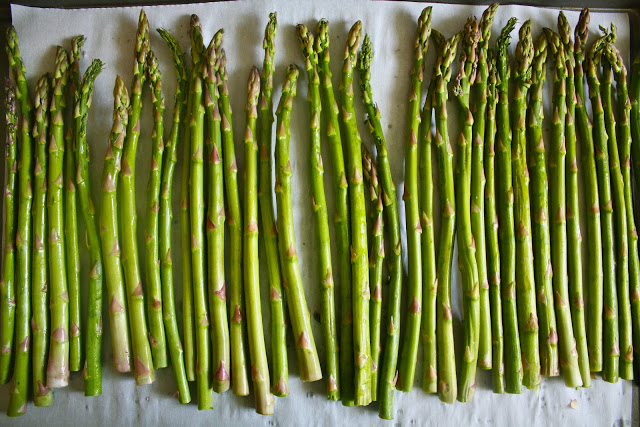
The first is for Roasted Asparagus with Lemony Breadcrumbs, which was published in the most recent issue of Martha Stewart Living. I like to use pencil-thin asparagus for this one. Yes, it is more expensive than the wider asparagus, but in this particular dish I think it makes a difference. I tend to use the wider variety when I make asparagus soup. Since there are so few ingredients in this asparagus dish, buy the best quality produce you can find.
The second recipe is for Green Beans with Red Pepper Vinaigrette. My friend Jo Ellen brought this side dish over for a recent playdate/dinner. I made macaroni and cheese and the green beans were the perfect compliment to the pasta entree. Jo got the recipe from her sister-in-law Sara, who came up with it while trying to recreate the flavors she tasted in a similar bean dish. I like to use haricot vert, but traditional string beans will certainly do the trick.
This green bean recipe is one of my new favorites. Flavorful and simple. And now that I think about it, I bet the red pepper vinaigrette would make a really nice drizzle for asparagus. Hey, wait a minute. Is there some sort of recipe development happening here?! I'll try it and let you know how it turns out...
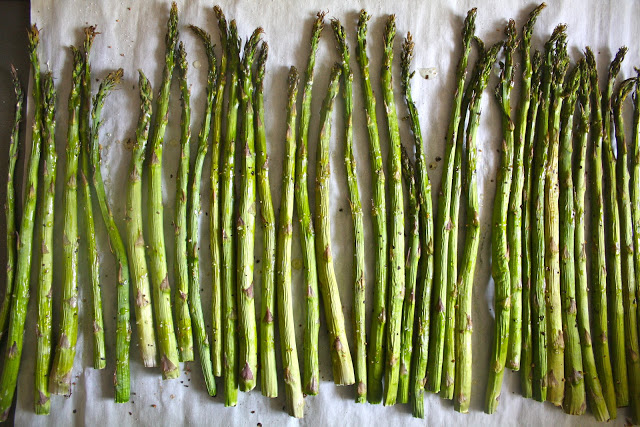
Roasted Asparagus with Lemony Breadcrumbs
Courtesy of Martha Stewart
Serves 6 (You can easily halve the recipe)
Ingredients
2 pounds asparagus, trimmed
1 tablespoon extra-virgin olive oil
Coarse salt and freshly ground pepper
2 tablespoons unsalted butter
1/2 cup panko- Japanese breadcrumbs (I used high-quality plain breadcrumbs)
1/2 lemon, juiced and zested
Garnish: 1/2 lemon, cut into wedges
Directions
Preheat oven to 425 degrees. Arrange asparagus on a rimmed baking sheet, and drizzle with oil. Season with 1/2 teaspoon salt and 1/4 teaspoon pepper. Roast until tender, 18 to 20 minutes, then transfer to a platter.
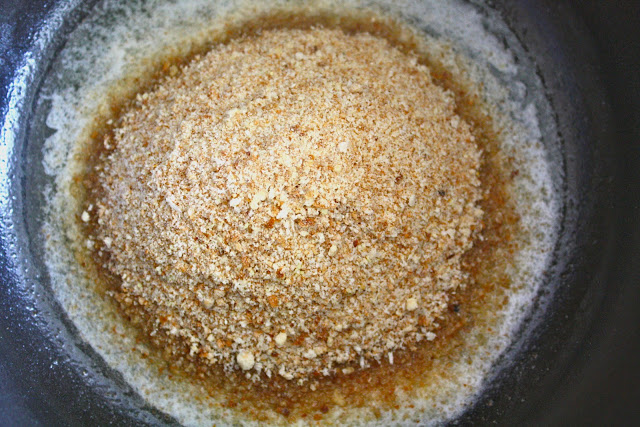
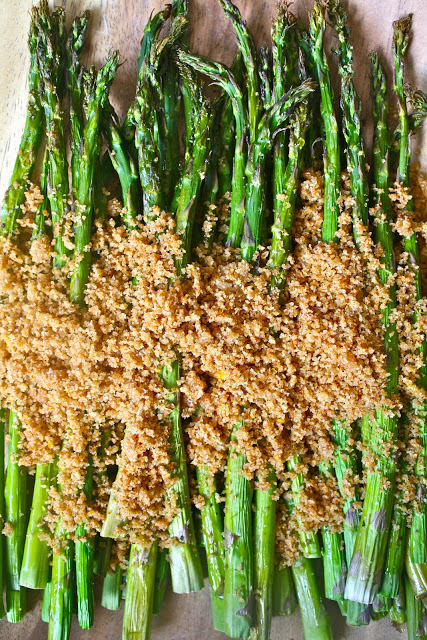
Meanwhile, melt butter in a medium skillet over medium heat. Add panko, and cook, stirring frequently, until deep golden brown, 8 to 10 minutes. Remove from heat, and stir in lemon juice and zest. Season with salt. Top asparagus with breadcrumbs, and garnish with lemon.
Click the link for another asparagus recipe: Linguine with Asparagus, Egg and Hollandaise. Yes, it's delicious!
* * *
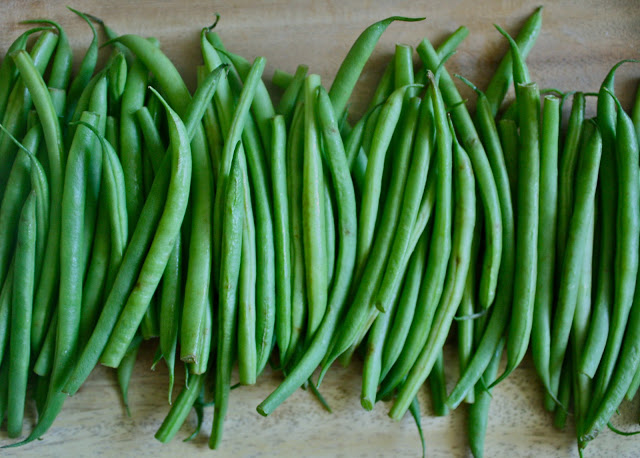

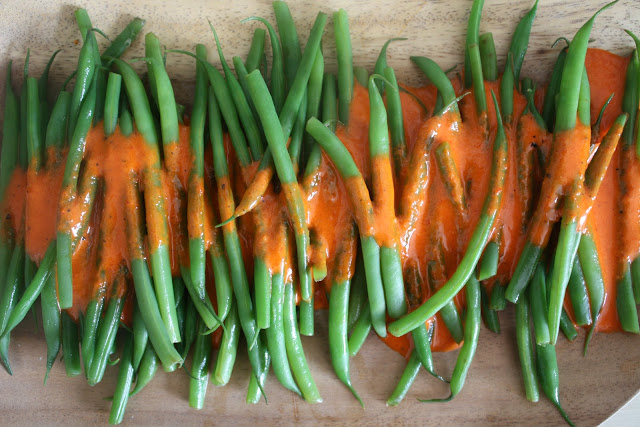
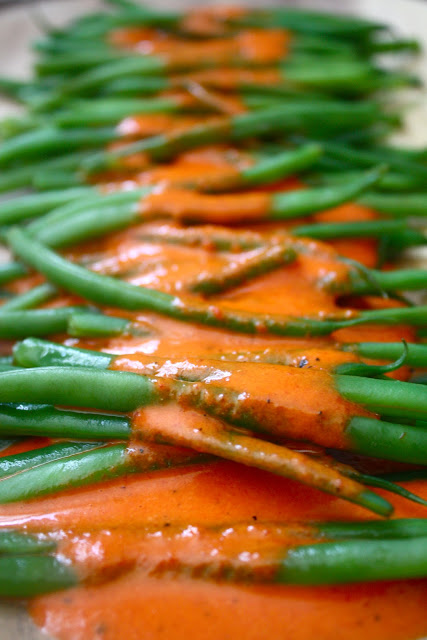
Green Beans with Red Pepper Vinaigrette
(Courtesy of Sara Stevens, by way of her sister-in-law Jo Ellen)
2 pounds of green beans, boiled for 5 minutes in salty water, then dropped in an icy bath.
2 pounds of green beans, boiled for 5 minutes in salty water, then dropped in an icy bath.
Vinaigrette
1-2 cloves of garlic (I go with 1)
1 teaspoon honey
1 teaspoon Dijon mustard
1/2 cup olive oil
1/4 - 1/3 cup white wine vinegar
Mix the vinaigrette ingredients in a small food processor so that the garlic is pulverized. Add salt and pepper to taste.
1-2 cloves of garlic (I go with 1)
1 teaspoon honey
1 teaspoon Dijon mustard
1/2 cup olive oil
1/4 - 1/3 cup white wine vinegar
Mix the vinaigrette ingredients in a small food processor so that the garlic is pulverized. Add salt and pepper to taste.
Add roasted red peppers from a jar- 1/2 to most of the jar. Whir that up a bit. It doesn't need to be a smooth puree, get the dressing to the consistency of your liking. Adjust seasoning (and keep in mind that the dressing has to stretch over all those beans...so a little bit more salt would work.)
Pour the dressing over the beans. Let it sit in the fridge for a while, overnight is good.
Serve!
Heart Healthy Wake-Up Call: Kim Boyce's Oatmeal Pancakes (and a picnic treat)
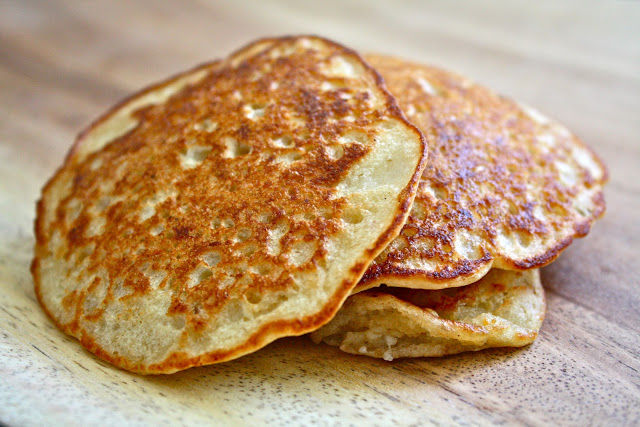
Anyway, I've been meaning to make these Oatmeal Pancakes ever since I saw them on The Wednesday Chef blog. I finally got it done.
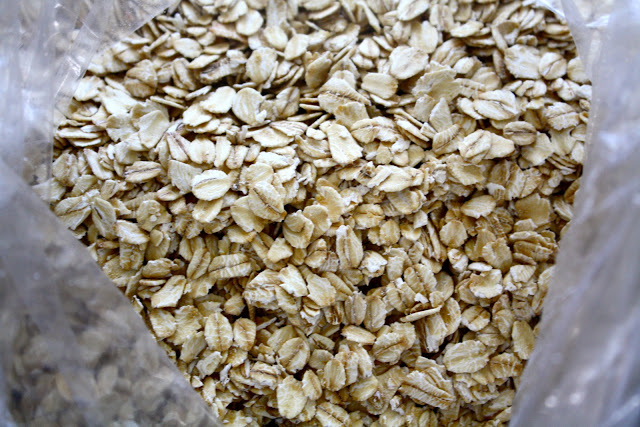
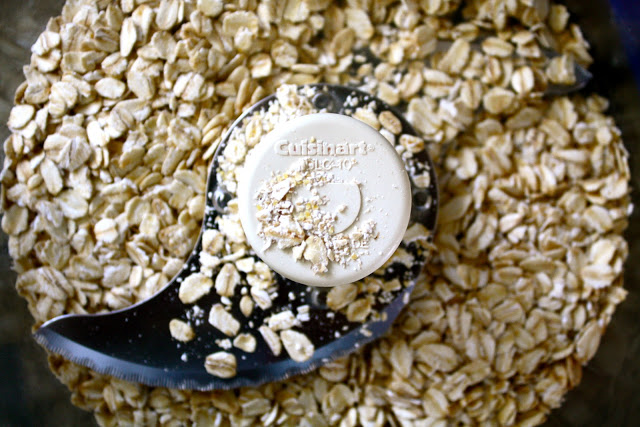
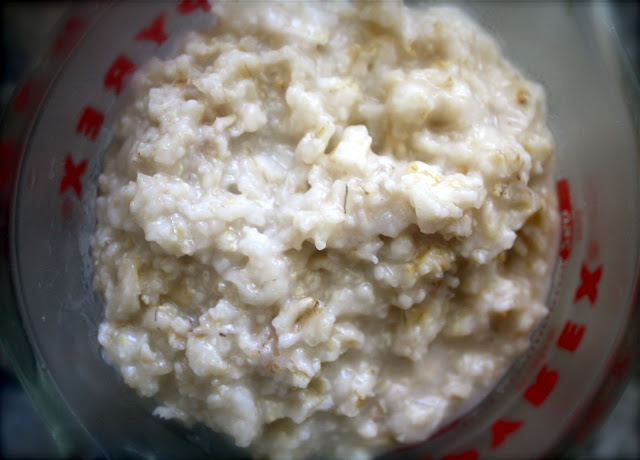
For some reason I thought they would take a long time to prepare, which is not the case at all. This recipe uses rolled oats-- as a porridge (oats boiled in water for 5 minutes) and as a flour (oats pulsed for about 1/2 minute in the food processor). A quick and easy way to convert oatmeal into a pancake and get some soluble fiber into your diet!
I had a few cups of rolled oats left over from some Swedish Chokladbollars I made during a play date a few weeks ago, so it was time to make these pancakes.
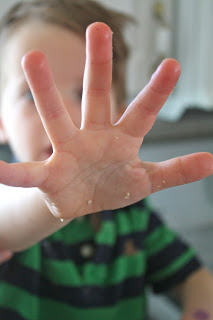
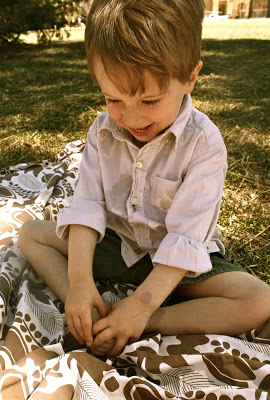
As you can see, they were a total hit with Otis. He ate 5. That's him in the picture below showing you how many he ate. So between the Quinoa Patties and these Oatmeal Pancakes, I'm batting over 300. That's pretty good. And speaking of batting, baseball season is just around the corner! Yippee. Andy Pettitie is back in pinstripes after coming out of retirement. And even though I'm living in Denver, I am still a 5th generation New Yorker, so I'll still be rooting for the Bronx Bombers...well, at least for this year.



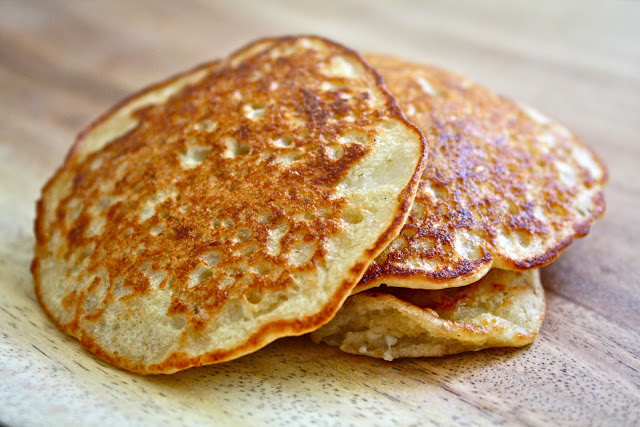
Makes about 18 pancakes
3/4 cup oat flour (pulse 3/4 cup rolled oats into a food processor or spice grinder until finely ground)
1 cup all-purpose flour
2 tablespoons sugar
2 teaspoons baking powder
3/4 teaspoon kosher salt
3 tablespoons unsalted butter, melted and cooled slightly (plus extra for the pan)
1 1/4 cups milk
1 cup cooked oatmeal*
1 tablespoon unsulphured (not blackstrap) molasses or 1 tablespoon honey
2 large eggs
1. Whisk the oat flour, flour, sugar, baking powder and salt together in a large bowl. In a smaller bowl, whisk the butter, milk, cooked oatmeal, honey and eggs together until thoroughly combined. Gently fold the wet ingredients into the dry ingredients. Using a light hand is important for tender pancakes; the batter should be slightly thick with a holey surface. Although the batter is best if using immediately, it can sit for up to 1 hour on the counter or overnight in the refrigerator. When you return to the batter, it will be very thick and should be thinned, one tablespoon at a time, with milk. Take care not to overmix.
2. Heat a 10-inch cast-iron pan or griddle over medium heat until water sizzles when splashed onto the pan. Rub the pan generously with butter. Working quickly, dollop 1/4-cup mounds of batter onto the pan, 2 or 3 at a time. Once bubbles have begun to form on the top side of the pancake, flip the pancake and cook until the bottom is dark golden-brown, about 5 minutes total. Wipe the pan with a cloth before griddling the next pancake. Continue with the rest of the batter.
3. Serve the pancakes hot, straight from the skillet or keep them warm in a low oven.
* To make oatmeal, if you don’t have any leftover: Bring 2 cups of water, 1 cup of rolled oats and a pinch of salt to a boil and simmer on low for 5 minutes. Let cool. You’ll have some extra oatmeal, which you can eat while you’re cooking.
* * *
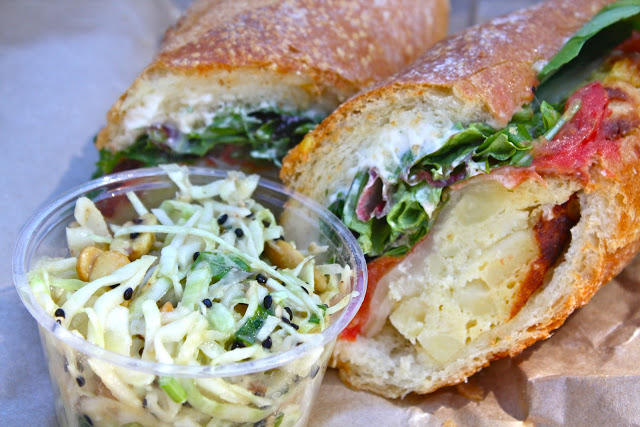
After breakfast we had to do a quick wardrobe change (Otis, who was my sous chef, was covered in batter), and then we were off to spend a wonderful afternoon in Washington Park. I picked up a sandwich from Vert--the Tortilla Espanola and a side of spicy peanut slaw. It was scrumptious. I really love that place.


I also made some Beet Tahini the night before. I brought that along on the picnic too and served it with some crudités. The picture is not great, but the recipe is FANTASTIC. It's the perfect summer dip, one that I'm going to have on hand at all times. Yes, I liked it that much. And I knew I would since it's an adaptation of a Moro East recipe.

Beet Dip with Tahini (Adapted slightly from A Lovely Morning, Adapted from Moro East)
3 large beets
1/2 garlic clove, coarsely chopped
3 tablespoons extra virgin olive oil
1 1/4 tablespoons tahini
3 tablespoons chopped fresh mint (though I left it out one time I made this dip and it was still delicious)
2 teaspoons red wine vinegar
sea salt and pepper
Preparation
Preheat over to 400 degrees. The actual recipe calls for boiled beets. I decided to roast them (as suggested by A Lovely Morning) since don't usually boil beets. I drizzled them with a little bit of olive oil, sprinkled them with some salt and black pepper, wrapped them in tin foil and baked for about 1 1/2 hours-- or until tender. Let them cool and then peel the skin off. Coarsely chop them and transfer them to the food processor. Add garlic, olive oil, and tahini and pulse in the processor until you have a nice semi-smooth puree. Then add the mint, vinegar, salt and pepper and pulse for a minute more.
Taste. Adjust salt and pepper to taste. Add lemon juice if you like.
1/2 garlic clove, coarsely chopped
3 tablespoons extra virgin olive oil
1 1/4 tablespoons tahini
3 tablespoons chopped fresh mint (though I left it out one time I made this dip and it was still delicious)
2 teaspoons red wine vinegar
sea salt and pepper
Preparation
Preheat over to 400 degrees. The actual recipe calls for boiled beets. I decided to roast them (as suggested by A Lovely Morning) since don't usually boil beets. I drizzled them with a little bit of olive oil, sprinkled them with some salt and black pepper, wrapped them in tin foil and baked for about 1 1/2 hours-- or until tender. Let them cool and then peel the skin off. Coarsely chop them and transfer them to the food processor. Add garlic, olive oil, and tahini and pulse in the processor until you have a nice semi-smooth puree. Then add the mint, vinegar, salt and pepper and pulse for a minute more.
Taste. Adjust salt and pepper to taste. Add lemon juice if you like.


When we got home, Otis went to sleep. This time it was Theo who needed a wardrobe change. Then we played ball with Omar in the yard. It was another great day in Denver. Well, minus the 'lake incident' when Otis decided to chase the geese right into the lake, fully clothed and with his shoes on. He came out soaking wet, partially-covered in mud, but he laughed all the way to the car.
I was not laughing quite as much...
Heidi Swanson's Quinoa Patties

Wanting to make something seasonal to celebrate the arrival of spring, I thumbed through my Heidi Swanson cookbooks (this one and this one) to see what I could find. Initially I settled on a spring minestrone soup, but then the thought of shopping for ingredients I didn't have on hand stopped me in my tracks. That will be for tomorrow, I thought to myself. So I settled on an oldy-but-goody, Heidi's recipe for Little Quinoa Patties.
I took a quick peek in the pantry and sure enough I had about 1 1/2 cups of dried quinoa sitting in a bag. This plan was starting to come together...
I used leftover chives that I bought for a Fresh Pea Soup and some extra Gruyere in the fridge also came in handy. I cooked two cups of (dry) quinoa, but ended up with much more than the 2 1/2 cups required for this recipe. Not a worry, I'll make some other quinoa salad this week.
I ate the patties plain on the first night and topped them with fresh avocado and some Panola hot sauce the next night. Both ways were great, but boy do I like hot sauce with these patties.
Notes on subsequent takes of this recipe {updated 3/2013}
- I used 1 cup of dried well-washed quinoa and 1 1/2 cups of water. I put those in a medium sauce pan and brought them to a boil. Then I turned the heat down to medium-low. I added another 1/4 cup of water about 15 minutes into the cooking time. The quinoa was ready after 25 minutes or so.
- I used 3/4 of a yellow onion, instead of a whole onion.
- I used about 3-4 ounces of goat cheese instead of Gruyere since I had some in the fridge. I didn't add any hot sauce or avocado this time.
Everything else remained the same (see below). Otis ate about 3 patties and wanted "more, more, more..." so I'm going to consider this a big success since he's become a very, um, particular eater (I think that's the nice way to say it).
Well time is short and the boys will be waking up soon.
Enjoy the spring and happy cooking!


Ingredients
2 1/2 cups cooked quinoa, at room temperature
4 large eggs, beaten
1/2 teaspoon fine-grain sea salt
1/3 cup finely chopped fresh chives
1 yellow or white onion, finely chopped
1/3 cup freshly grated Parmesan or Gruyère cheese
3 cloves garlic, finely chopped
1 cup/3.5 oz /100 g whole grain bread crumbs, plus more if needed
Water, if needed
1 tablespoon extra-virgin olive oil or clarified butter (I needed about a tablespoon per batch of 6.)
Directions
Combine the quinoa, eggs, and salt in a medium bowl. Stir in the chives, onion, cheese, and garlic. Add the bread crumbs, stir, and let sit for a few minutes so the crumbs can absorb some of the moisture. At this point, you should have a mixture you can easily form into twelve 1-inch/2.5cm thick patties. I err on the very moist side because it makes for a not-overly-dry patty, but you can add more bread crumbs, a bit at a time, to firm up the mixture, if need be. Conversely, a bit more beaten egg or water can be used to moisten the mixture.
Heat the oil in a large, heavy skillet over medium-low heat, add 6 patties, if they'll fit with some room between each, cover, and cook for 7 to 10 minutes, until the bottoms are deeply browned. Turn up the heat if there is no browning after 10 minutes and continue to cook until the patties are browned. Carefully flip the patties with a spatula and cook the second sides for 7 minutes, or until golden. Remove from the skillet and cool on a wire rack while you cook the remaining patties. Alternatively, the quinoa mixture keeps nicely in the refrigerator for a few days; you can cook patties to order, if you prefer.
To cook quinoa:
Combine 2 cups of well-rinsed uncooked quinoa with 3 cups water and 1/2 teaspoon fine-grain sea salt in a medium saucepan. Bring to a boil, cover, decrease the heat, and simmer for 25 to 30 minutes, until the quinoa is tender and you can see the little quinoa curlicues.

1/3 cup finely chopped fresh chives
1 yellow or white onion, finely chopped
1/3 cup freshly grated Parmesan or Gruyère cheese
3 cloves garlic, finely chopped
1 cup/3.5 oz /100 g whole grain bread crumbs, plus more if needed
Water, if needed
1 tablespoon extra-virgin olive oil or clarified butter (I needed about a tablespoon per batch of 6.)
Directions
Combine the quinoa, eggs, and salt in a medium bowl. Stir in the chives, onion, cheese, and garlic. Add the bread crumbs, stir, and let sit for a few minutes so the crumbs can absorb some of the moisture. At this point, you should have a mixture you can easily form into twelve 1-inch/2.5cm thick patties. I err on the very moist side because it makes for a not-overly-dry patty, but you can add more bread crumbs, a bit at a time, to firm up the mixture, if need be. Conversely, a bit more beaten egg or water can be used to moisten the mixture.
Heat the oil in a large, heavy skillet over medium-low heat, add 6 patties, if they'll fit with some room between each, cover, and cook for 7 to 10 minutes, until the bottoms are deeply browned. Turn up the heat if there is no browning after 10 minutes and continue to cook until the patties are browned. Carefully flip the patties with a spatula and cook the second sides for 7 minutes, or until golden. Remove from the skillet and cool on a wire rack while you cook the remaining patties. Alternatively, the quinoa mixture keeps nicely in the refrigerator for a few days; you can cook patties to order, if you prefer.
To cook quinoa:
Combine 2 cups of well-rinsed uncooked quinoa with 3 cups water and 1/2 teaspoon fine-grain sea salt in a medium saucepan. Bring to a boil, cover, decrease the heat, and simmer for 25 to 30 minutes, until the quinoa is tender and you can see the little quinoa curlicues.
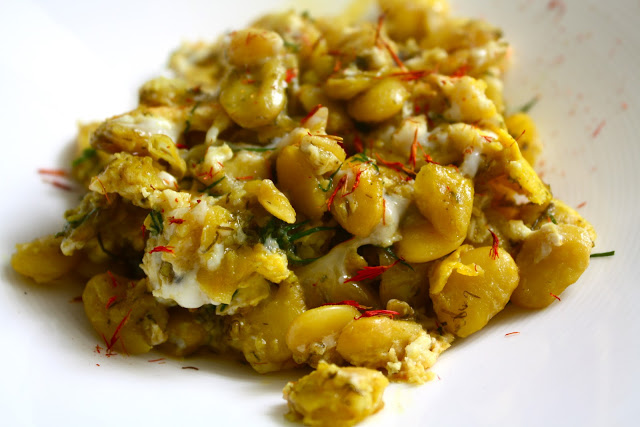
Baghali Ghatogh (Lima Beans with Eggs and Dill)
My interest in all things Persian and
Iranian predates that little/embarrassing guilty pleasure called The Shahs of Sunset on
Bravo television. Before I got married and had children, I did a lot of
traveling. But there was one country I'd always wanted to go to but never
managed to visit. And that country was Iran. I was curious about ancient
Persian history and modern-day, post-revolution, multi-ethnic Iranian
society.
Iran holds an important geographic
location: Iraq is situated to the West, the Caspian Sea is to the North,
Afghanistan to the East, the Persian Gulf and Gulf of Oman are to the
South. Turkmenistan and Pakistan share a border with Iran as well.
Basically, Iran straddles the Middle-East and South Asia.
Persian cuisine is considered one of the most ancient and developed styles
of cooking. It has influenced the cuisine of its neighboring countries as well
as those countries that are hundreds of miles away. Countries in North
Africa, the Middle-East and the Indian-Subcontinent can trace some of their
dishes back to Persian precedents. That said, Iranian cuisine is really
distinct from what most people associate with greater Middle-eastern cooking.
I‘ve wanted to delve into Persian cooking
for a while, so I excited to see Saveur’s story “The Land of
Bread and Spice” last month. It was full of great
looking Iranian recipes, and quite a few were vegetarian. This dish- Baghali Ghatogh- was the
first one I tried and it was fantastic. I'm always looking for new vegetarian
entrees, and this one was not only delicious, but it perfumed the house with
the smells of saffron, garlic, dill and turmeric. Fantastic, really.
Now regarding the preparation:
Since I live at altitude I had to cook the
beans for a bit longer than suggested and I added a little bit more water to
get the beans tender. I also modified the amount of dill, using 3 cups instead
of 4, but that is only because that's what I had in my fridge. Next time I'll
use 4 cups.
After the success of this dish I'm
definitely going to be doing a lot more cooking with these flavors and spices.
And with a little bit of assistance from The Legendary
Cuisine of Persia, I'm sure I'll get it right! As they say in
Farsi, nooshe jan! نوش جان
Baghali Ghatogh (Lima Beans with Eggs and Dill)
Eggs cooked with dill-scented lima beans is
a northern Iranian specialty. This recipe
appeared in Saveur magazine (March 2012) in Anissa Helou's story The Land of
Bread and Spice.
Serves 4
Ingredients
6 tbsp. unsalted butter
½ tsp. ground turmeric
4 cloves garlic, finely chopped
4 cups finely chopped dill (I used 3 cups*)
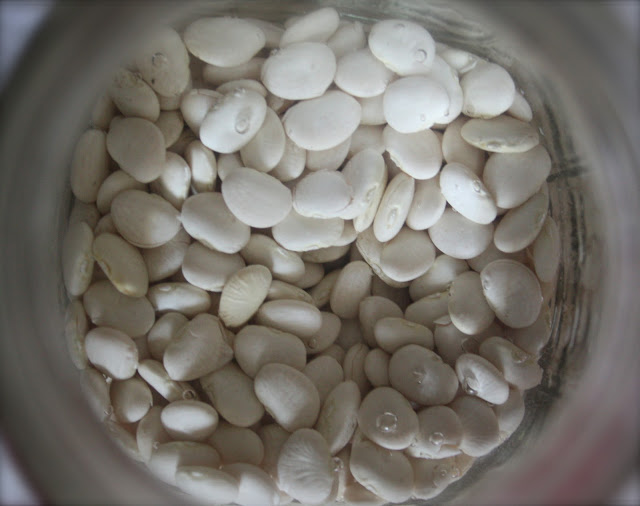
1 cup dried lima beans, soaked overnight,
drained
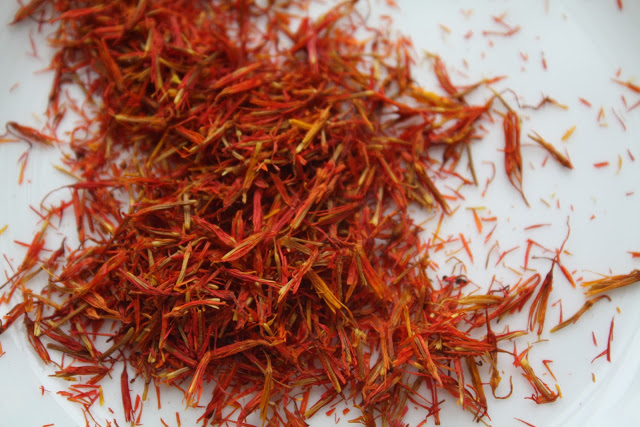
¼ tsp. Crushed saffron {See comments below. I used safflower, next time
I'll use saffron.}
5 cups of cold water
Kosher salt and freshly ground black
pepper, to taste
4 eggs
Saffron threads, to garnish
Instructions
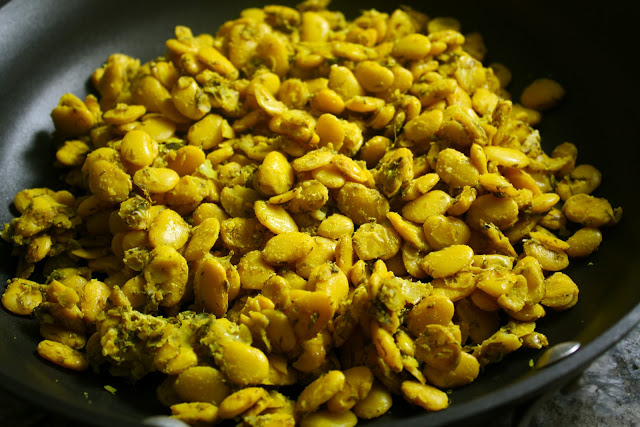
Heat butter in a 12″ skillet over medium
heat. Add turmeric and garlic; cook until fragrant, about 3 minutes. Add 3 cups
(I used 2) dill and the beans; cook until dill is slightly wilted, about 2
minutes. Add crushed saffron and 5 cups water; boil. Reduce heat to medium-low;
cook, covered, until beans are tender, about 1½ hours. {My cooking time was
more like 1 3/4 hours and I had to add a bit more water.} Season with salt and
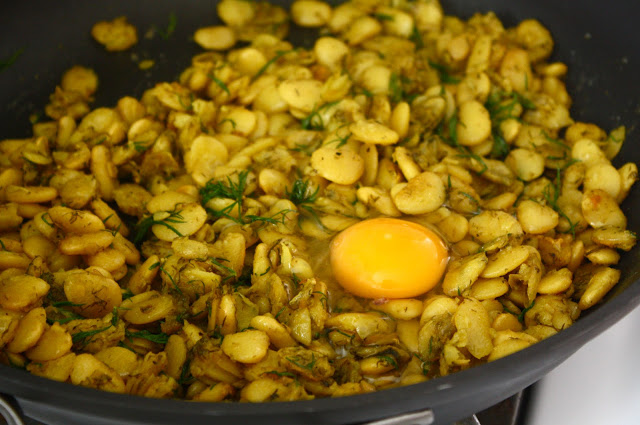
pepper; stir in remaining dill. Using a spoon, form 4 shallow wells in bean
mixture; crack an egg into each well. Cook until eggs are cooked over-easy,
about 3 minutes. Sprinkle with saffron before serving.


I enjoy traveling, photography, hiking, street art, design, architecture, food trucks, gardening, the cosmos, cooking with the seasons, political activism and wallpaper! I know my interests span a variety of categories, here's where they all come together.

