
Your Custom Text Here
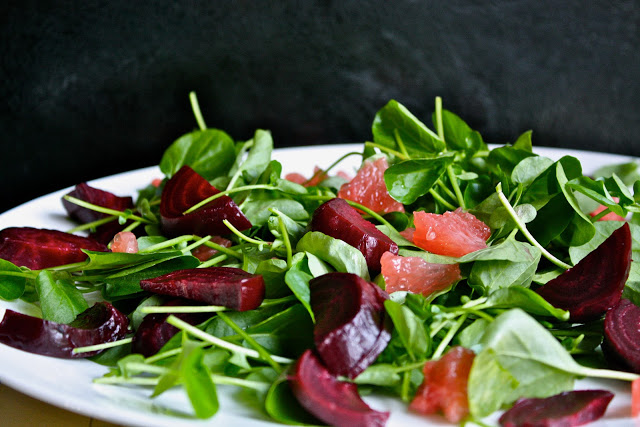
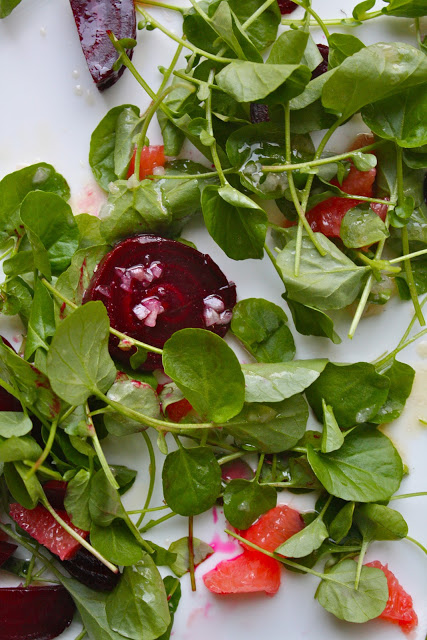
red rocks in january and a winter citrus salad (beets, grapefruit and watercress)
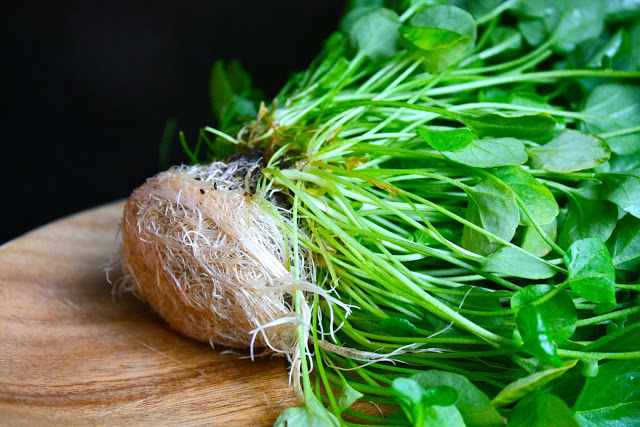
We absolutely love living in Colorado, but every now and again we get a bout of homesickness. Technology helps us connect with our families back east, but nothing, and I mean nothing, is a substitute for a face-to-face conversation; an in-person visit. When someone buys a ticket, gets on a plane, doesn't mind sleeping on an inflatable mattress for a week and is more than happy to wake up in the morning with your early-rising kids...well, that just says love.
Aunt Barbara, my mother-in-law's sister, has visited us twice since we moved here. On her most recent trip she came with us to the petting zoo, hiked a trailhead at Red Rocks, and was more than accommodating when we did a little house-hunting. She also washed every dish I own until it sparkled like a diamond. Aunt Barbara did some babysitting too, so my husband and I were able to get a few nights off to celebrate my birthday weekend. We had some great meals at Jonsey's Eat Bar and The Kitchen...and a few drinks too. When we dropped Aunt Barbara off at the airport we asked, "When are you coming back?" And we really meant it.
Clean sheets and a comfortable bed are one way to make a guest feel welcome. But so is good food. For Aunt Barbara's first night I made Baked Ziti with homemade sauce and this salad (below). It's fresh, clean and seasonal too. This is one to make before winter citrus is no longer at its peak. Here it is...enjoy!
xo
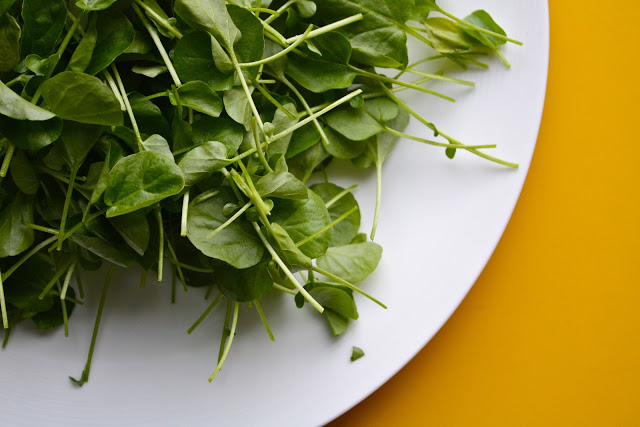
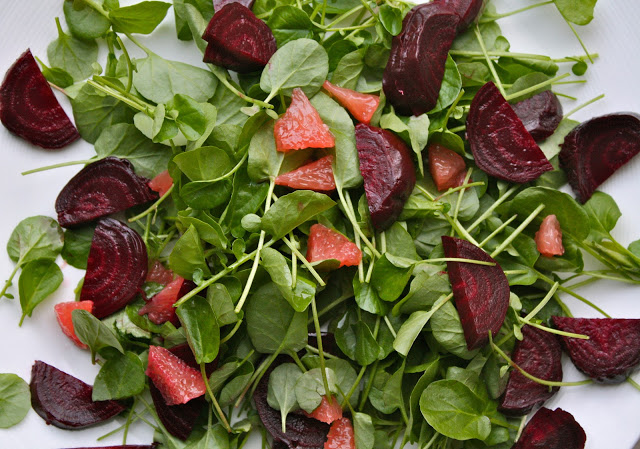
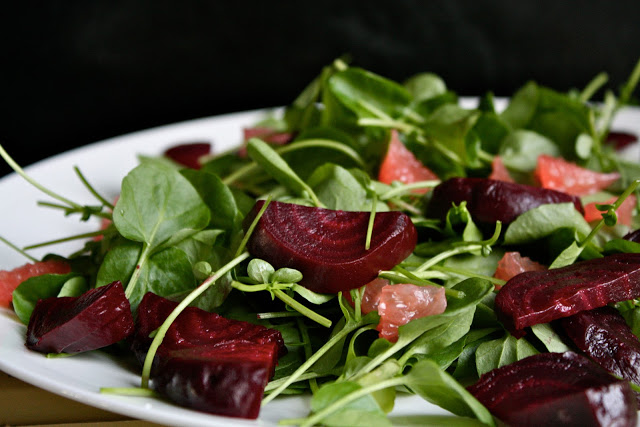
Grapefruit-and-Beet Salad (Adapted slightly from The New York Times)
Originally published with Eat, Memory: The Ideology of Taste by Roy Blount Jr., November 27, 2005
Ingredients
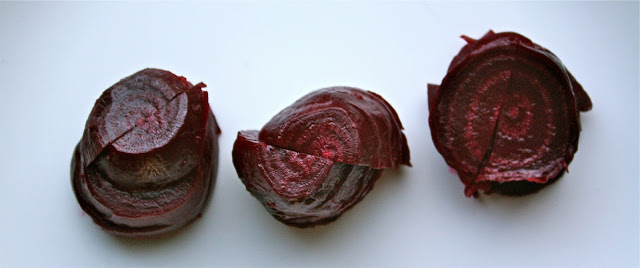
1/2 pound beets (2 or 3), trimmed
3 tablespoons extra virgin olive oil, plus more for beets
Kosher salt
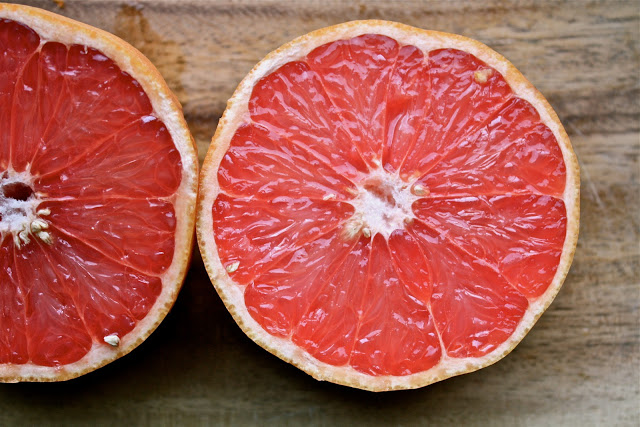
2 large red or pink grapefruit, peeled, white pith removed
1/2 shallot, finely diced
2 1/2 teaspoons fresh lemon juice
1/2 teaspoon Dijon-style mustard
1 bunch watercress, stemmed and trimmed (about 2 cups)
Freshly ground black pepper
Preparation
- Preheat the oven to 350F. Lay the beets on one end of a sheet of aluminum foil, sprinkle with olive oil and season with salt. Fold over the remaining foil and crimp the edges to seal. Place on a baking sheet and bake for 45 minutes to 1 hour, or until fork tender (this step usually takes me about 1 hr. 15 minutes.) Cool and peel, then slice into 1/4-inch-thick half-moons.
- Segment the grapefruit and set aside the membrane. Gently pat the segments dry with a paper towel. Squeeze 1* teaspoon juice from the membrane and reserve.*You can do a little more if you want a more intense grapefruit flavor.
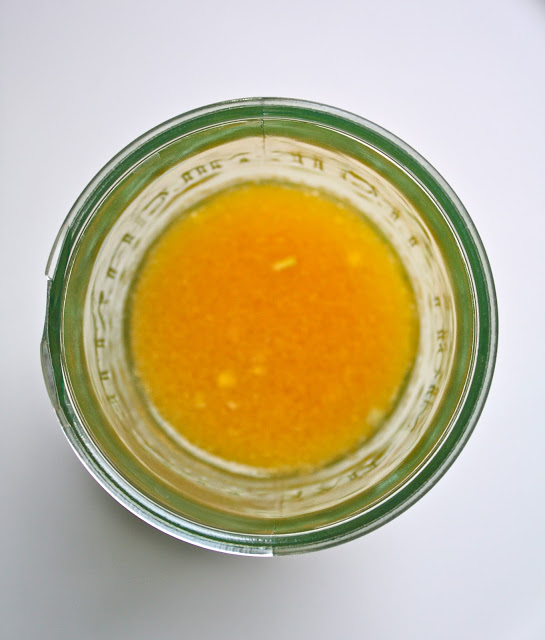
- Combine shallot, reserved grapefruit juice, lemon juice and salt to taste in a bowl. Let sit for 10 minutes. Whisk in mustard, then 3 tablespoons olive oil. Adjust seasoning.
- In a large bowl, add the beets, grapefruit segments and watercress. Season with salt and freshly ground black pepper. (Don't neglect this step. Salt and pepper are key!) Gently fold the dressing into the salad.

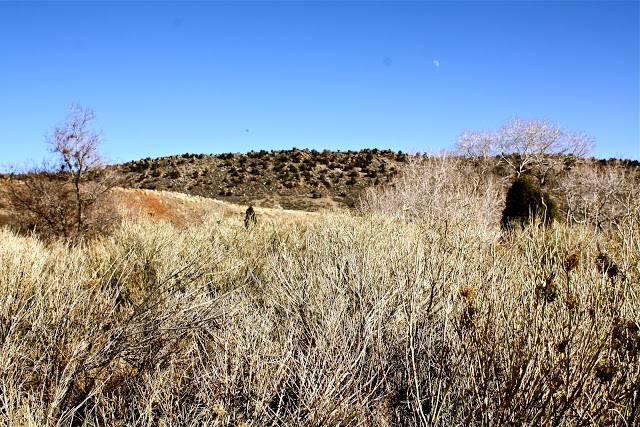
I like seeing how the colors change with the seasons. At one of my favorite hiking spots near Red Rocks there's green brush in the spring, the rocks look redder in the summer (and there are wildflowers too), leaves start falling in the autumn and the grasses are dry and the color of honey-straw in the winter.
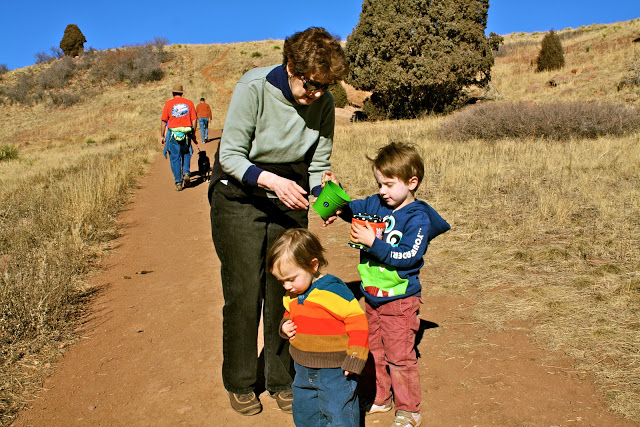
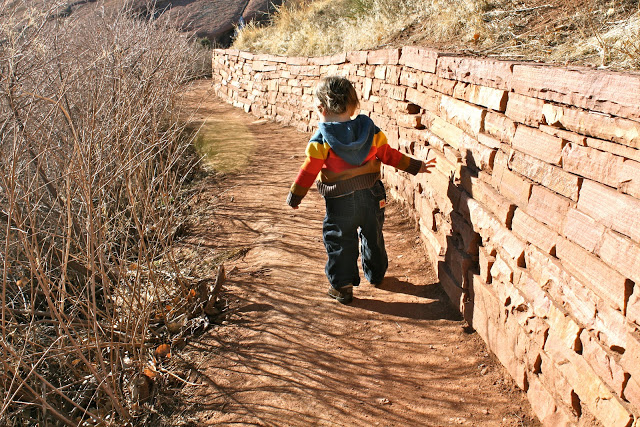
It had been quite some time since we went to Red Rocks, so when Aunt Barbara said she was game to go on a hike, we piled in the car and headed out in the direction of Morrison, Colorado. After Morrison we drove a few more miles before we got to the trailhead where I've taken the boys several times. Otis had his 'hiking bucket' and was ready for rock collecting. Theo was content picking up small twigs. My husband had the day off from work so he was happy to be getting some fresh air. And Aunt Barbara, realizing just how strong the Colorado sun can be, understood why hiking in the middle of January can be a wonderful way to spend an afternoon...






Winter Citrus: Deb's Grapefruit Olive Oil Pound Cake and Ina's Lemon Yogurt Pound Cake (plus trial-and-error baking at altitude)

I'll be honest, I'm glad 2012 is over. Though there were some pretty
spectacular moments, there was a good deal of stress and heartache too. Our
nuclear family was separated for almost 7 months while my husband flew
back-and-forth between Denver and Brooklyn. And my father had a massive heart
attack at the end of the summer, just 3 days after visiting us in Colorado. There
were emergency flights back home, lots of tears and the fear of what would come
next but we survived. There were births, engagements, weddings and
promotions so it wasn't all bad, but there were some very tough at times and I'm
hoping that it's smooth sailing ahead with the trying times behind us.
Unfortunately 2012 wanted to have the last laugh. In the final and penultimate day(s) of the year, I got hit with the plague. And it left me feeling pretty crummy. Flu-like symptoms, sinus pressure, a pounding headache, and fever kept me in bed and under the covers. Our friend's New Year celebration was cancelled because they too were under the weather. So we spent a quiet New Year's Eve, watching the ball drop/fireworks on television and thinking about all the (hopefully) good things to come in the year ahead. Then I went back to bed.
Unfortunately 2012 wanted to have the last laugh. In the final and penultimate day(s) of the year, I got hit with the plague. And it left me feeling pretty crummy. Flu-like symptoms, sinus pressure, a pounding headache, and fever kept me in bed and under the covers. Our friend's New Year celebration was cancelled because they too were under the weather. So we spent a quiet New Year's Eve, watching the ball drop/fireworks on television and thinking about all the (hopefully) good things to come in the year ahead. Then I went back to bed.
I was feeling much better by January, 2nd and I was really back on my
feet by the 3rd, thanks in no small part to: 4 bowls of Pho, 3 bowls of
matzo ball soup, 2 boxes of Kleenex, 1 box of Sudafed, a handful of Ibuprofen
and some nighttime sleep aids. After all that, I was right as rain. Though my New Year's
resolutions aren't terribly ambitious or lengthy (send out postcards on a
regular basis, write down family recipes, learn to snow shoe, read short
stories, blog/internet stuff Monday through Friday-- take the weekends off, be
kind, channel the Dalai Lama, etc.), I added one thing to my list now that I am
post-plague. Namely, infuse my diet with lots of vitamin C. That brings me to
winter citrus and some really great pound cakes...
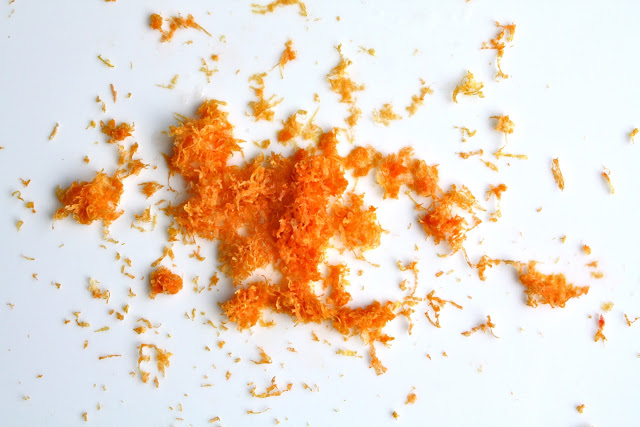
Most people probably think of summertime and lemonade when they
think of citrus. But there are a few varieties that pop with flavor over the
winter months, and while they aren't locally grown, they taste great because
they are seasonal. Meyer lemons, blood oranges, ruby red grapefruits, satsumas
and kumquats come to mind.
I've been making Ina's Classic
Lemon Yogurt Cake with Lemon Glaze for several years, and I
usually find myself craving it in the early winter months. There is something
about cake ingredients that include lemon, oil and glaze that work for me when
it's cold outside.
I'd thought about substituting grapefruit for lemon, but never
actually got around to experimenting. Then I saw Deb Perelman's Grapefruit
Olive Oil Pound Cake-- she'd done it! Her version is inspired by Ina's Lemon
Cake (see recipe way below) and Martha Stewart's rendition. Melissa Clark also
interpreted the now-famous cake, as have some great bloggers that I follow regularly. My point is this cake is making the rounds.

I made the grapefruit cake for our friends Beth and Philip, who
were in town visiting family over the holidays. They dropped by our house for
wine and dessert, and since they were coming over a bit later in the evening, I
thought a light citrus cake would do the trick.
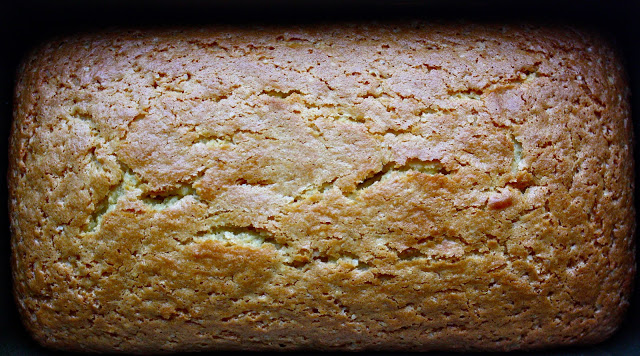
The cake tasted
great, but it looked rather sad. It basically collapsed right down the middle.
I've come to learn that pound cakes in particular, can take a beating at
altitude. So I posted my issue on the Culinary Content
Network FB page. The solutions came pouring in.
I now know that there is less atmospheric pressure the higher up
you go in elevation. Chef Tom
wrote, "What typically happens is your baked goods get over leavened,
meaning they rise faster than the wheat can hold the bubbles, and it falls. The
trick: reduce the amount of baking powder (I live at 5000 ft and reduce it by
half), and/or add 3 tbs flour per cake..." Another commenter told me to
"add a little water" and Ruth Tobias
directed me to this site.
When I made the cake the second time (but with only half the
glaze because I ran out of confectioners' sugar), it came out perfectly! I
subtracted 1/4 teaspoon of baking powder, put in an extra tablespoon of flour
and I added an extra tablespoon of both yogurt and olive oil. The verdict? It
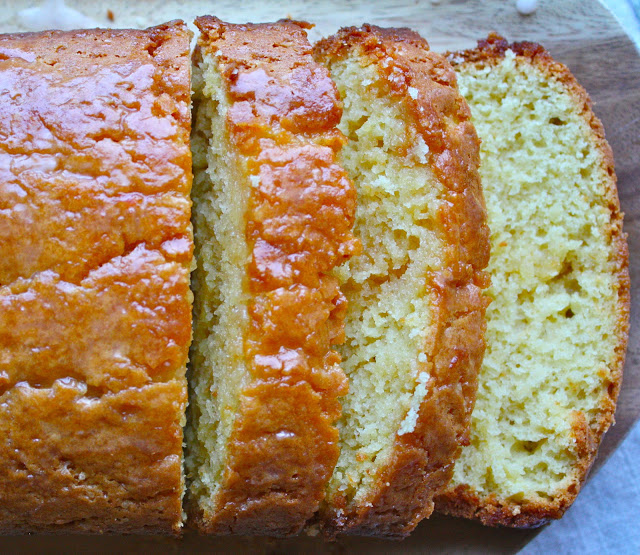
tasted delicious AND it didn't sink. The pound cake had a perfect dome and I
was finally getting around those pesky altitude problems.
I decided to post Deb's recipe as it's written in her cookbook,
with my adaptations for altitude (and some changes I made on my second
go-around) in parenthesis.
Hope you enjoy both of these winter citrus cakes. Serve with a
side of tea and stay warm.
xo,
-Batya

Grapefruit Olive Oil Pound Cake
Adapted ever-so-slightly from Smitten Kitchen by Deb Perelman, and inspired
by A Good Appetite
by Melissa Clark.
Note: Most of my adaptations were made in order to compensate
for problems that can surface when you bake pound cake at high altitude (in my
case, Colorado). Increasing liquids and decreasing leavening agents are noted
in {parens}.
Yield: 1
loaf
Serves:
6-8 (Deb says 12. Not the case in our house.)
the Cake
Butter for pan
1 1/2 cups all-purpose flour {Altitude: I added 1 extra
tablespoon}
2 tablespoons freshly grated grapefruit zest, from 2 large
grapefruits
1/2 cup granulated sugar
1/2 cup raw or turbinado sugar (I use raw sugar in these Belgian Sugar Waffles. You can use granulated if you can't find the
raw variety)
1/2 cup olive oil {Altitude: I added 1 extra tablespoon}
2 large eggs at room temperature
1 teaspoon baking powder {Altitude: I reduced the baking powder
by 1/4 teaspoon}
1/4 teaspoon baking soda
1/2 teaspoon table salt
2 tablespoons freshly-squeezed grapefruit juice (I used ruby
red)
1/3 cup buttermilk or plain yogurt {I went with Noosa's Plain Yoghurt with Honey. It was
wonderful in this recipe. I've also made the cake with buttermilk. Both work
well. Add 1 extra tablespoon of buttermilk or yogurt, to compensate for
altitude. You could probably also add 1 teaspoon of honey.}
the Syrup
2 tablespoons granulated sugar
1/3 cup freshly-squeezed grapefruit juice
the Glaze
1 cup confectioners' sugar
2 tablespoons freshly-squeezed grapefruit juice
Pinch of salt

Preparations
make the cake: Heat the over to 350
degrees. Butter and flour a 9-by-5-inch loaf pan.
In a large bowl, rub the grapefruit zest into the sugars with
your fingertips. This will bruise it and help release as much grapefruit
essence as possible. Whisk in the oil until smooth. Add the eggs one at a time,
and whisk until combined. Scrape down the bowl.
Combine the flour, baking powder, baking soda, and salt in a
second bowl. In a liquid measuring cup, combine 2 tablespoons of
grapefruit juice and buttermilk/or yogurt. Add the flour and
buttermilk/or yogurt mixtures, alternating between them, to the oil-and-sugar
mixture, beginning and ending with flour.
Spread the batter in the pan, smooth the top, and rap the pan
on the counter a few times to ensure there are no air bubbles trapped. Bake for
45 minutes to 1 hour, until a cake tester comes out clean.
make the grapefruit syrup:
Combine 2 tablespoons of sugar with 1/3 cup grapefruit juice in a small
saucepan and cook over low heat until the sugar dissolves.

When the cake is finished, let it cool for 10 minutes in the
pan and then invert it onto a rack set over a tray. Poke holes in the cake with
a skewer or toothpick, then spoon or brush the grapefruit syrup over the cake.
Let the cake cool completely while it absorbs the syrup.
make the glaze: Combine the confectioners' sugar,
grapefruit juice, and pinch of salt in a bowl, whisking until smooth. Pour the
glaze over the top of cooled cake, and allow glaze to drizzle decoratively down
the sides.

* * *

Note: Follow the general guidelines for baking at altitude
stated above.
Cook Time: 50 min
Yield: 1 loaf
Ingredients
For the cake:
1 1/2 cups all-purpose flour
2 teaspoons baking powder
1/2
teaspoon kosher salt
1 cup plain whole-milk yogurt
1 1/3 cups sugar, divided
3
extra-large eggs
2 heaping teaspoons grated lemon zest (2 lemons)
1/2 teaspoon
pure vanilla extract
1/2 cup vegetable oil
1/3 cup freshly squeezed lemon
juice
For the glaze:
1 cup confectioners' sugar
2 tablespoons
freshly squeezed lemon juice
Directions
• Preheat
the oven to 350 degrees F. Grease an 8 1/2 by 4 1/4 by 2 1/2-inch loaf pan.
Line the bottom with parchment paper. Grease and flour the pan.
• Sift
together the flour, baking powder, and salt into 1 bowl. In another bowl, whisk
together the yogurt, 1 cup sugar, the eggs, lemon zest, and vanilla. Slowly whisk
the dry ingredients into the wet ingredients. With a rubber spatula, fold the
vegetable oil into the batter, making sure it's all incorporated. Pour the
batter into the prepared pan and bake for about 50 minutes, or until a cake
tester placed in the center of the loaf comes out clean.
• Meanwhile,
cook the 1/3 cup lemon juice and remaining 1/3 cup sugar in a small pan until
the sugar dissolves and the mixture is clear. Set aside.
• When
the cake is done, allow it to cool in the pan for 10 minutes. Carefully place
on a baking rack over a sheet pan. While the cake is still warm, pour the
lemon-sugar mixture over the cake and allow it to soak in. Cool.
For the glaze, combine the confectioners' sugar and lemon juice
and pour over the cake.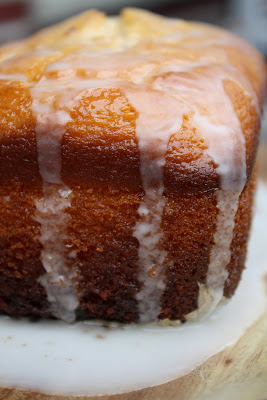
Kat's Three Citrus Marmalade with Smoked Salt
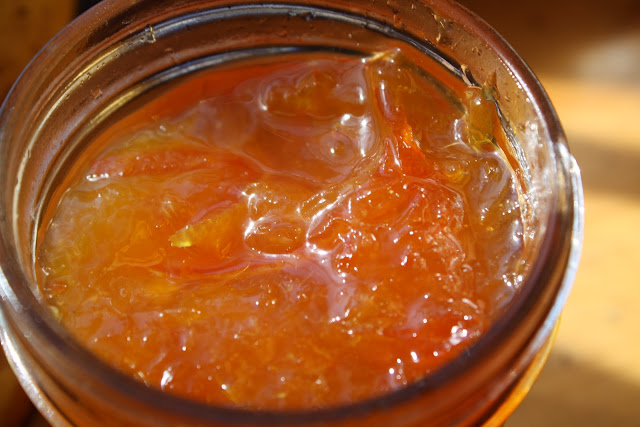
I've got lots of friends who love to cook, but a few of them are truly exceptional. They take it to the next level...like my friend Kathryn. She could easily open up her own restaurant if she wanted to quit her day job. She has a culinary instinct that is unmatched and her annual six-course dinner has become legendary at my husband's place of work.
You can imagine, then, how delighted I was when Kat sent me a little mason jar filled with Three Citrus Marmalade with Smoked Salt. It was absolutely delicious. I put it on a wonderful french bread I picked up at Colson's Patisserie. She paired it with a buttermilk scone. Either way, you can't go wrong. Toast and marmalade make for a perfect breakfast or tea-time treat. This is also a great way to use seasonal winter citrus before local spring and summer fruits start coming onto the scene.
Kat kindly let me post her recipe here, which is an adaptation of a Eugenie Bone recipe. I hope you enjoy it as much as I did...
Kat In Her Own Words:
"Last weekend's little project was a collision of two marmalade recipes: Eugenia Bone's Three Citrus Marmalade, but with a smoked salt twist inspired by Anarchy In a Jar's Grapefruit Marmalade with Smoked Salt.
The resulting marmalade is a lovely, bright spread with the sweetness of Meyer lemons, the tartness of grapefruit and a slight bitterness that's balanced by a mild smoke flavor. Neither too bitter nor too sweet, I've been eating this every chance I can get! And I'm pretty sure I'm going to have to make another batch sometime very, very soon. Even though citrus isn't local, it certainly is seasonal, and I want to make sure that I'll have enough of this perfect marmalade to keep my pantry stocked all year long!"
Three Citrus Marmalade with Smoked Salt
adapted from Well-Preserved by Eugenia Bone
Yields a little more than 4 half-pints
2 grapefruits, pink or red
4 oranges (I used navel)
3 Meyer lemons
4 to 5 cups of sugar
1/2 t. unsalted butter
1/2 t. smoked sea salt
Peel the skin off of one orange and two lemons with a vegetable peeler and use the back of a knife to scrape off as much as you can of the white pith. Cut the cleaned rinds into thin matchsticks, then put them into a saucepan with 3 cups of water and cook over medium heat until tender. (About 20 to 25 minutes.)
Meanwhile, peel the remaining fruits. Cut them in half through the middle to remove seeds, then coarsely chop the oranges and lemons. For the grapefruit, cut supremes by slicing the flesh from between the membranes with a sharp paring knife. Measure the resulting fruit pulp and juice mixture - I had about four cups altogether. You'll want to match the amount of sugar to the amount of pulp; so for four cups of fruit, use four cups of sugar. If your yield is closer to five cups, use five cups of sugar.
Add the pulp, sugar, softened rinds and their cooking water to a large, heavy pot. (I used my IKEA dutch oven.) Cook over medium low heat, stirring occasionally, until the mixture reaches 220 degrees on a candy thermometer. (The original recipe suggests that this will take about 30 minutes; I found that it was more like 45 minutes, and required the heat being turned up to medium during the last 15 minutes.)
When the marmalade reaches 220 degrees, remove it from the heat and add the smoked sea salt. Continue to stir for three or four minutes while marmalade cools to insure proper distribution of the peels and pulp.
This recipe yields a little bit more than four half-pints of marmalade. If you're heat processing your marmalade for shelf-stability, jars should be processed for ten minutes. Otherwise, refrigerate cooled marmalade and eat within a week.
Avocado and Grapefruit Salad
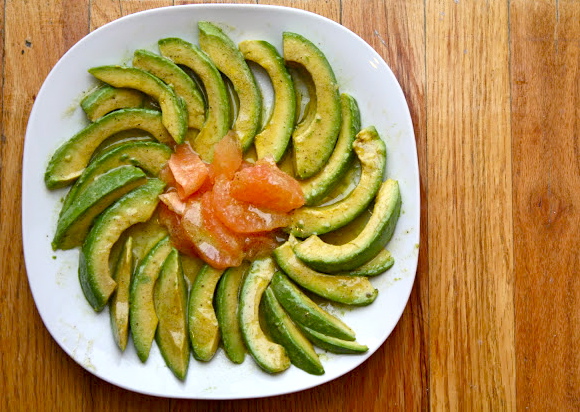
On a recent show Ina went to a local farm to select the freshest, most-seasonal ingredients for a three-course meal she was preparing for some friends. Fresh and colorful corn, ripe and flavorful tomatoes, as well as the most gorgeous basil and herbs.
Of course this made me long for the days when we got fresh, local and seasonal vegetables from our CSA (weep). But alas, our CSA share ended three months ago and we have a few more months to go before delivery starts again...
I've been eating a ton of apples, squashes, potatoes, and legumes, but what is really 'in season' right now, and bursting with flavor, is citrus. (It's very seasonal, but not very local-- so you can be the judge of how your 'environmental footprint' is doing and make your purchases accordingly...)
I've been having a severe craving for all things citrus recently: blood oranges (see this post), limes, lemons, oranges and ruby red grapefruits. I thought I was going to go out of my mind the other day if I didn't get my hands on a Steve's Key Lime Pie. You know you have problems when you think of going out in a snow storm to get that perfect pie-- graham cracker crust with the most delicious key lime filing. Topped with whipped cream? Yes please! But that's a story for another time...
Anyway, this salad makes the most of the season's best fruit. I had it for the first time at my husband's aunt's home and was waiting to make it again-- and then I saw the most perfect ruby red grapefruits and I knew the time had come. Enjoy!



Ingredients
Yields 4-6
1 tablespoon Dijon mustard
1/4 cup freshly squeezed lemon juice
1 1/2 teaspoons kosher salt
3/4 teaspoon freshly ground black pepper
1/2 cup good olive oil
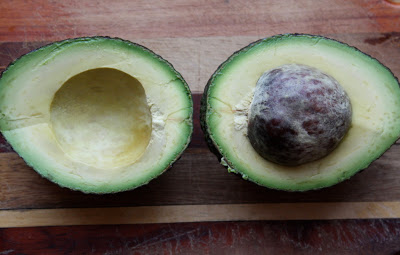
4 ripe Hass avocados
2 large red grapefruits
Directions
Place the mustard, lemon juice, salt, and pepper in a small bowl. Slowly whisk in the olive oil until the vinaigrette is emulsified.
Before serving, cut the avocados in 1/2, remove the pit, and carefully peel off the skin. Cut each half into 4 thick slices. Toss the avocado slices in the vinaigrette to prevent them from turning brown. Use a large, sharp knife to slice the peel off the grapefruits (be sure to remove all the white pith), then cut between the membranes to release the grapefruit segments.
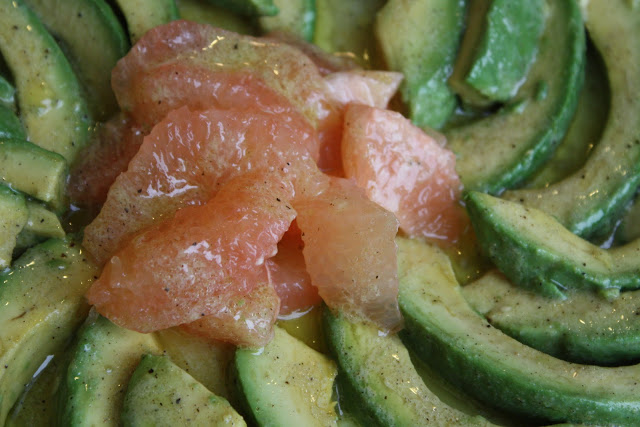
Arrange the avocado slices around the edge of a large platter. Arrange the grapefruit segments in the center. Spoon the vinaigrette on top, sprinkle with salt and pepper, and serve.


I enjoy traveling, photography, hiking, street art, design, architecture, food trucks, gardening, the cosmos, cooking with the seasons, political activism and wallpaper! I know my interests span a variety of categories, here's where they all come together.

